Your Northeast Wisconsin Home Maintenance Calendar
Living in Wisconsin means embracing four distinct seasons, each bringing its own unique rhythm and challenges to your home. From the biting winds of a -20°F January to the oppressive humidity of a July afternoon, our climate is not just a backdrop for our lives; it is an active force that constantly tests the integrity of our properties. In the Northwoods, where the landscape shifts from snow-covered silence to lush, green abundance, your home must be just as adaptable.
Proper seasonal maintenance is far more than a checklist of chores; it is the essential strategy for preserving your investment and your peace of mind. Ignoring the subtle signs of wear during the "shoulder seasons" of spring and fall can lead to catastrophic failures when the extremes of winter or summer hit. By staying ahead of the curve, whether it's sealing a driveway before the freeze or cleaning gutters before the melt, you can save thousands of dollars in emergency repairs, prevent structural damage, and ensure your Northwoods property remains a sanctuary of comfort and safety year-round. This guide is your roadmap to navigating that cycle, turning the daunting task of home ownership into a manageable, rewarding routine.
The Ultimate Northeast Wisconsin Home Maintenance Guide
Whether you are in Crivitz, Niagara, Wausaukee, or the heart of Marinette County, home maintenance isn't just a chore, it's a survival strategy for your investment. Our unique "Northwoods" climate, characterized by extreme temperature swings that can shift 50 degrees in a single day and heavy precipitation that tests every seal on your home, demands a specialized approach to property care. The homes that hold their value decade after decade aren't the ones built with the most expensive materials, they're the ones whose owners stayed one step ahead of the seasons. A little timing and intentionality goes a long way in a part of Wisconsin where the difference between a $5 tube of caulk and a $5,000 repair bill often comes down to whether you acted in October or January.
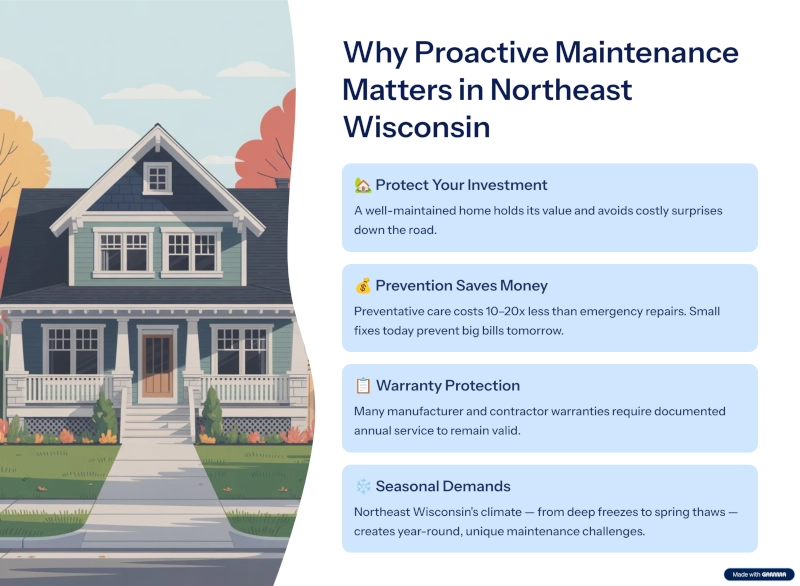
Why Wisconsin Home Maintenance is Different
In our region, the "Freeze-Thaw Cycle" is your home's greatest, yet most invisible, enemy. It isn't just about the cold; it's about the volatility. When temperatures hover right around the freezing mark which is common in our unpredictable Northeast Wisconsin springs and falls. Water seeps into microscopic cracks in your concrete, mortar, and siding. As the temperature drops, that trapped water freezes and expands by nearly 9%, exerting tons of pressure against the surrounding material. Then, as the sun comes out and it melts, the pressure releases, only for the cycle to repeat days later.
This relentless "hammering" action can literally tear apart concrete driveways, creating spiderweb cracks that widen into potholes within a single season. It can pull gutters away from fascia boards, compromising your roofline's drainage, and lift shingles until they are vulnerable to wind and water intrusion. The damage is often slow and silent, accumulating over months until a sudden storm reveals a catastrophic failure. Understanding this cycle is the first step in protecting your home; by sealing cracks and ensuring proper drainage before the cycle begins, you stop the expansion before it starts.
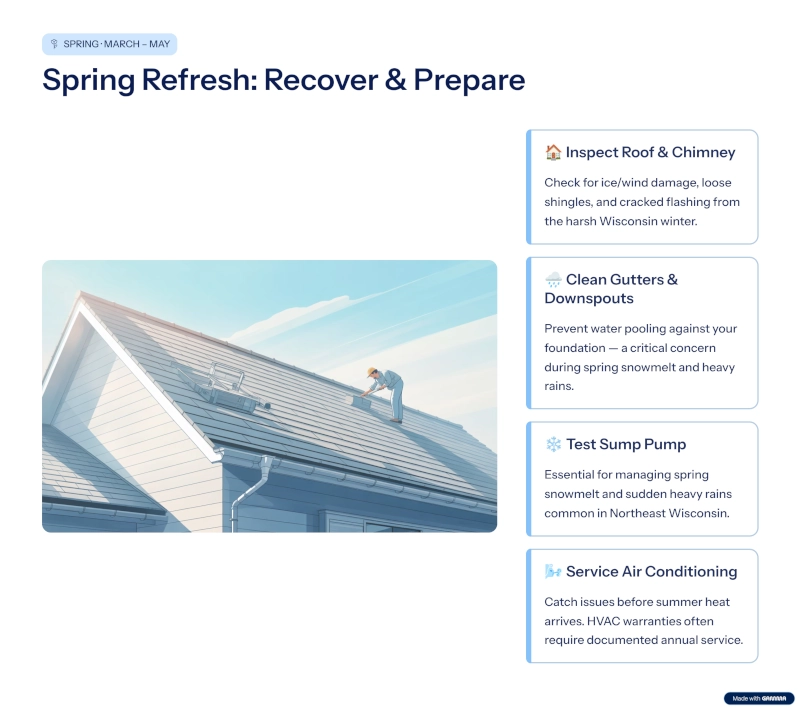
The "Big Melt": Water Defense
As the "Big Melt" begins in the Northwoods, your home faces its first major test of the year. The combination of heavy snowpack and thawing ground creates a perfect storm for water damage, making this the most critical time for proactive defense.
Your first line of defense is your sump pump. With the significant snowmelt common in Marinette County, you need to know your pump is working before the ground fully thaws. Perform a "stress test" in March by pouring a bucket of water into the pit to trigger the switch. If your unit is older than 7–10 years, don't wait for a failure; consider replacing it now to avoid a flooded basement when the rains come.
Next, turn your attention to the roof and gutters. Ice and heavy snow often cause gutters to sag, detach, or become clogged with debris. Ensure they are securely attached and angled to direct water at least 5–10 feet away from your foundation. This simple adjustment prevents costly basement seepage and protects your soil from erosion. While you're up there, conduct a post-winter roof audit. Look for signs of "ice dam" damage, missing shingle granules, or lifted shingles near the eaves that could let water in during the next spring rain.
Finally, think ahead to the humid Wisconsin July. There is nothing worse than an AC failure in the peak of summer, and repair technicians are often booked solid by then. Get your HVAC tech out early to service your cooling system while they are still available. A little preventative maintenance now ensures you stay cool and comfortable when the heat arrives.
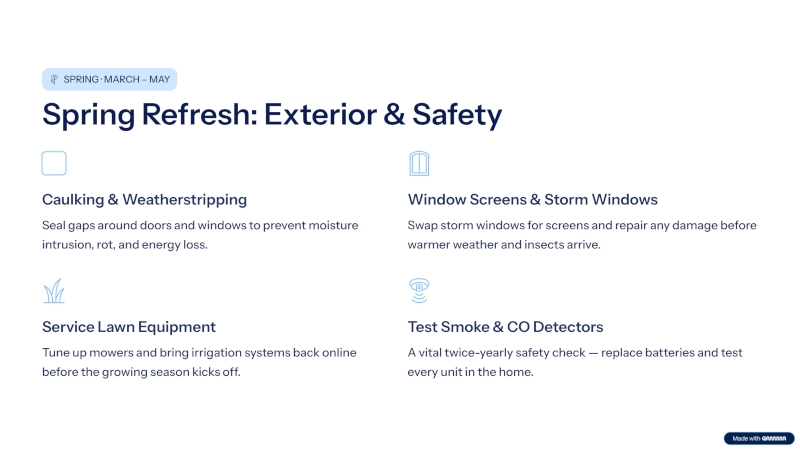
Spring: March – May Goal: Exterior and Safety
As the snow finally melts and the days get longer, it's time to shift your focus from indoor coziness to outdoor readiness. Spring is the perfect season to tackle exterior maintenance that protects your home from moisture intrusion and prepares it for the busy summer months ahead.
Start by inspecting the perimeter of your home. Over the winter, freeze-thaw cycles can cause small gaps to open up around doors and windows. Sealing these with fresh caulk and weatherstripping is a simple, low-cost task that prevents moisture from seeping in (which can lead to rot) and keeps your energy bills in check. While you're at it, swap out those heavy storm windows for lighter screens, and take a moment to repair any tears or damage so you're ready for the warmer weather and the inevitable arrival of insects.
Don't forget your outdoor tools! Now is the time to service your lawn equipment. Get your mower tuned up and flush out your irrigation systems before the growing season kicks into high gear. Finally, never overlook the basics: perform a vital twice-yearly safety check on your smoke and carbon monoxide detectors. Replace those batteries and test every unit to ensure your family is protected as you settle into the new season.
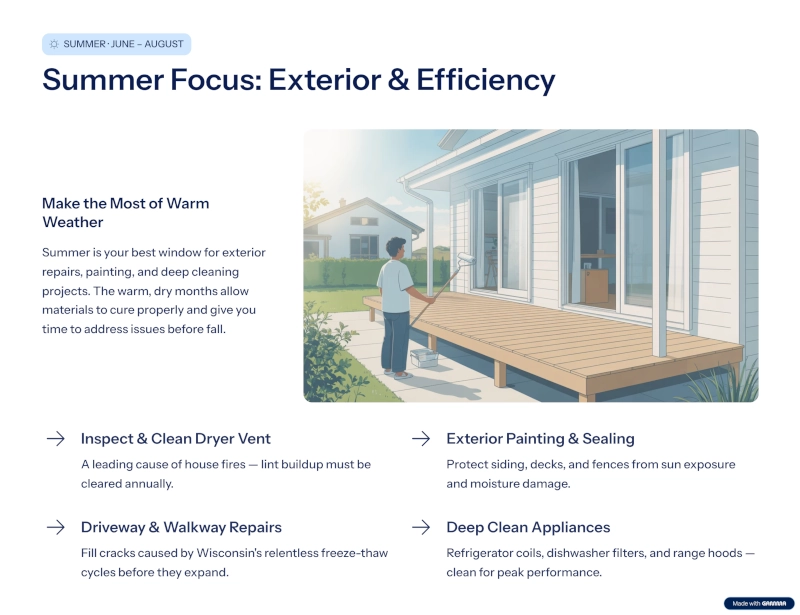
Summer: Fortify Your Exterior
In the Northwoods, the window of dry, stable weather is notoriously short. Once the humid summer sets in, outdoor projects become difficult, and once the leaves turn, the focus shifts entirely to winter prep. This means summer is your critical "fortification" season. You need to seal, stain, and ventilate now to protect your home against the coming humidity and the inevitable freeze-thaw cycles of winter.
Start with your hardscapes. Concrete and driveway sealing is often overlooked until it's too late. If you have visible cracks in your driveway or walkways, fill them now. It seems minor, but if you leave those cracks open, the water that seeps in during the summer will freeze and expand next winter, turning a hairline fracture into a major pothole or structural crack. Taking an hour to seal them now saves you hundreds in repairs later.
Next, address the wood. In our humid, heavily wooded environment, wood rot is a silent killer for decks, siding, and trim. Don't wait for the paint to peel. Apply a high-quality exterior paint or deck stain this summer. A proper sealant acts as a dual shield, protecting the wood fibers from both the harsh UV rays of the sun and the relentless moisture of our rainy seasons. This not only extends the life of your exterior but keeps your home looking its best for curb appeal.
Finally, ensure your home can "breathe." Proper ventilation is key to preventing mold and keeping energy costs down. Check your dryer vents and your attic intake/exhaust vents (specifically the soffit and ridge vents). Birds often build nests in these openings during the spring, and debris can accumulate quickly. Clearing them out ensures hot air escapes efficiently, preventing heat buildup in the attic that can damage your roof shingles and strain your AC system.
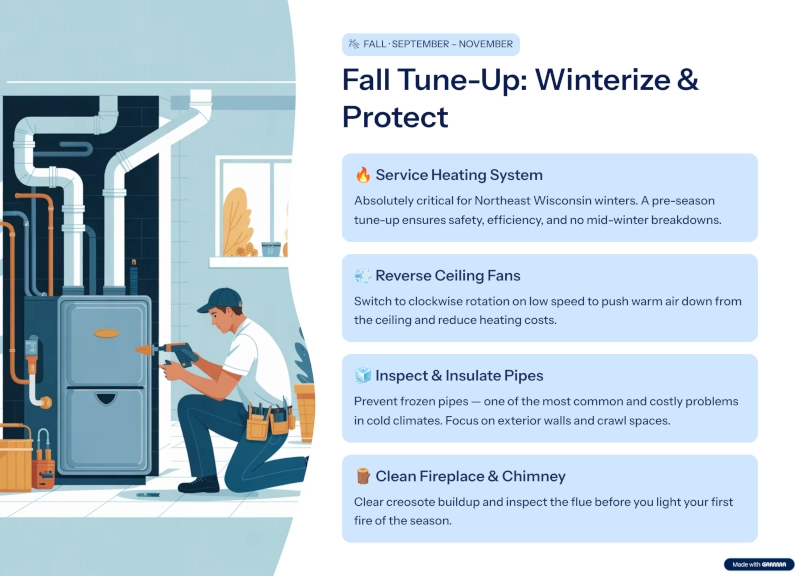
Fall Tune-Up: Heating & Interior Protection
In Northeast Wisconsin, the first frost can arrive unexpectedly, turning a mild October afternoon into a sub-zero night. Preparation is key to avoiding emergency repair costs when the temperature drops. The most critical step? A professional furnace "health check." A broken furnace in a -20°F January isn't just an inconvenience; it's a pipe-bursting emergency. Schedule your cleaning and inspection in September to ensure safety, efficiency, and peace of mind.
Don't forget the simple tricks that save money. Reverse your ceiling fans to a clockwise rotation on low speed. This pushes the warm air trapped at the ceiling back down to where you live, reducing your heating bill without sacrificing comfort. Simultaneously, inspect and insulate your pipes, especially those running through exterior walls and crawl spaces. Frozen pipes are one of the most common and costly problems in our cold climate, and prevention is far cheaper than the repair.
Finally, if you enjoy the warmth of a wood-burning stove or fireplace; a staple in our area. Ensure your chimney is swept. Clearing creosote buildup and inspecting the flue before lighting your first fire of the season is non-negotiable for fire safety. A clean chimney ensures your home stays warm without the risk of a chimney fire.
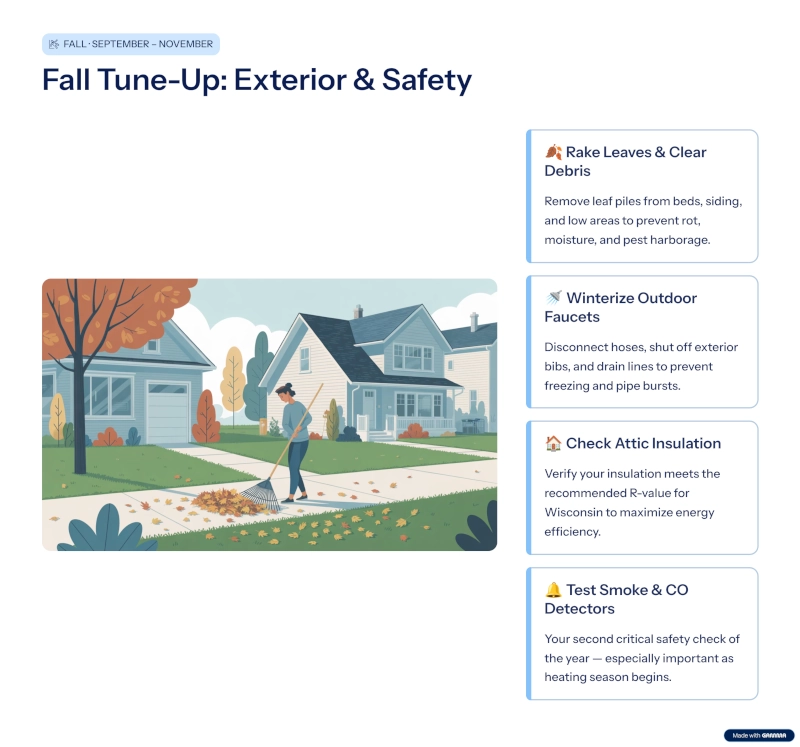
Fall Tune-Up: Exterior & Safety
While the interior gets ready for the cold, your home's exterior needs equal attention to survive the Wisconsin winter. Start by raking leaves and clearing debris from flower beds, siding, and low-lying areas. Piles of wet leaves can trap moisture against your foundation and siding, leading to rot and providing a perfect harborage for pests looking to move indoors for the winter.
Next, follow the "Outdoor Water" rule: winterize your outdoor faucets. Disconnect all hoses, shut off the interior valves to exterior bibs, and drain the lines. Even "frost-free" hydrants can burst if a hose is left attached during a sudden Crivitz cold snap. This simple 10-minute task prevents the nightmare of a burst pipe under your foundation.
To keep your energy bills in check, check your attic insulation. Verify that it meets the recommended R-value for Wisconsin. Proper insulation keeps heat from escaping into the attic, which is the primary cause of the dreaded "ice dam" on your roof. Finally, perform your second critical safety check of the year: test your smoke and CO detectors. With heating season beginning, these devices are your first line of defense against carbon monoxide and fire hazards.
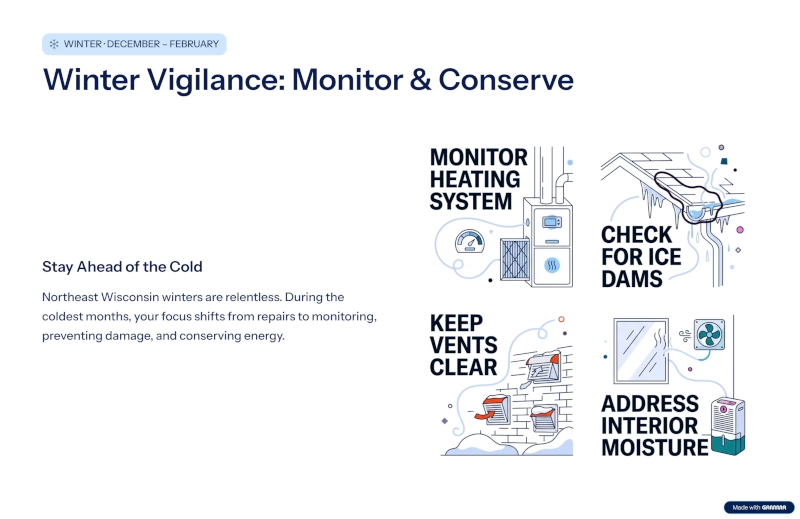
Winter Vigilance: Monitor & Conserve
Northeast Wisconsin winters are relentless. During the coldest months, your focus shifts from heavy repairs to constant monitoring, preventing damage, and conserving energy. The first sign of trouble is often visible from the ground: ice dams. If you see large icicles forming frequently along your eaves, it's a clear signal that your attic is leaking heat. Address this immediately by checking your insulation and ventilation; ignoring it can lead to water backing up under your shingles and causing significant interior damage.
Safety is paramount when snow piles up. Ensure snow clearance around your home's foundation to prevent water intrusion as it melts. More critically, keep all furnace and dryer exhaust vents completely clear of snow and ice. A blocked vent can trap deadly carbon monoxide inside your home, turning a routine winter day into a life-threatening emergency.
Finally, manage your indoor environment. The combination of cold outside air and heated indoor air often leads to excessive humidity, resulting in window condensation. This moisture is a breeding ground for mold and can cause wood rot on your window sills. Use a dehumidifier or adjust your HRV (Heat Recovery Ventilator) system to maintain optimal humidity levels, keeping your home dry, healthy, and comfortable throughout the freeze.

Your Partner in Homeownership
As a Realtor, I see firsthand how maintenance directly impacts home values. In the current Crivitz, WI housing market, the difference between a "quick sale" and a "long listing" often comes down to the condition of the property. Well-maintained homes don't just sell faster; they command significantly higher offers because buyers know they aren't walking into a money pit.
To keep your investment healthy, I recommend the "1% Rule": budget 1% of your home's total value annually for maintenance. In Crivitz, where average home values have seen a 15.7% increase recently, this isn't just an expense. It's a strategic investment that pays for itself in equity. A $200 gutter cleaning today prevents the $10,000 foundation repair tomorrow, preserving the very equity you've worked so hard to build.
My approach is unique because of my background in mortgage underwriting. Before I became a Realtor, I looked at homes strictly as financial assets. I know exactly what lenders and appraisers look for when valuing a property. A documented maintenance history is a powerful tool when it comes time to list your home. It proves to buyers that you've been a responsible steward of the property, giving them the confidence to offer top dollar.
Think of this calendar not just as a checklist, but as your year-round reference guide. A well-maintained home is a well-valued home. Whether you are planning to sell in five years or stay for fifty, I am here to help you every step of the way, ensuring your Northeast Wisconsin home remains a source of pride and profit.
Need Help With Your Home Maintenance?
Whether you're a new homeowner or have been in your Crivitz home for years, I'm here to help you navigate the challenges of Wisconsin homeownership. Contact me for personalized advice or to connect with trusted local contractors.
call Call Alyssa